As we navigate the midpoint of 2026, the global fitness industry is witnessing a significant convergence with the healthcare sector. The traditional boundary between “performance gym gear” and “rehabilitative medical equipment” has all but disappeared. For B2B fitness equipment wholesalers, medical procurement officers, and physiotherapy clinic owners, this shift represents a massive growth opportunity. Institutional buyers are no longer looking for basic consumer-grade accessories; they are demanding clinical-grade durability, certified material safety, and biomechanical precision. In this 2026 strategic guide, we analyze the surge in rehabilitative fitness gear demand and provide a blueprint for sourcing compliant equipment for the physical therapy sector.
The Medical-Fitness Convergence: Why Rehab Gear is the New High-Yield Vertical
In 2026, the “Exercise is Medicine” movement has moved from theory to large-scale institutional implementation. With aging populations in Australia, Europe, and North America, and an increasing focus on post-operative active recovery, the demand for equipment that facilitates safe, low-impact, and progressive resistance training has reached an all-time high. For wholesalers, the rehabilitation market offers higher margins and longer contract stability compared to the volatile retail fitness sector.
Key Equipment Vertical for 2026 Clinical and Rehab Spaces
To capture the high-value physical therapy market, B2B buyers must prioritize equipment that emphasizes safety, material purity, and modularity.
1. Precision Resistance for Progressive Loading
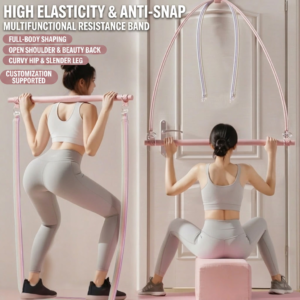
The core of physical therapy is progressive resistance—starting from near-zero and scaling up with surgical precision. In 2026, traditional rubber bands are being replaced by multi-layer dipped natural latex systems. Professional kits like the 180lbs Pilates Bar set are ideal for rehab environments because they provide a smooth, linear resistance curve that minimizes the risk of joint jarring. Sourcing kits with heavy-duty metal connection points and reinforced nylon sleeves is mandatory for high-frequency clinical use.
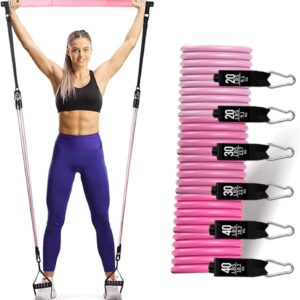
Rehab Spotlight: Professional Pilates Bar Kit – Multi-Tension System for Clinical Mobility Training
2. High-Stability Strength Anchors with Bio-Feedback Compatibility
Rehabilitating core and lower-back injuries requires absolute structural stability. Commercial-grade workout benches are no longer just for heavy lifting; they serve as the “Rehab Anchor” for guided spinal alignment and core engagement exercises. Sourcing benches constructed with 2.0mm+ high-tensile steel—such as the Pradai series—is essential. These benches must feature high-density, anti-microbial TPU upholstery that is both hypoallergenic and easy to sanitize between patients, meeting strict 2026 clinical hygiene standards.
Sourcing Highlight: Pradai Folding Ab Bench – Professional Grade Stability for Rehabilitation Zones
3. High-Purity Elastomer Accessories
In a clinical setting, material toxicity is a non-negotiable risk. 2026’s top PT clinics exclusively source accessories made from high-purity TPE (Thermoplastic Elastomer). TPE is free of the toxic phthalates and heavy metal residues often found in cheap PVC or recycled rubber. Accessories like multi-tube foot pedal pullers made from TPE provide the tactile comfort and odor-free profile necessary for indoor healthcare environments.
B2B Strategic Benefits: The Institutional Trust Advantage
Focusing your wholesale efforts on the rehabilitative sector provides significant commercial moats in 2026:
- Audit-Ready Documentation: By partnering with a technical OEM manufacturer like YK Fitness, wholesalers gain access to verified SGS structural reports and REACH/RoHS material safety data. This documentation is a prerequisite for winning government healthcare tenders and private hospital supply contracts.
- Higher Value Bundling: Clinical buyers prefer “Fit-Out Solutions” rather than individual SKUs. Wholesalers who can bundle benches, Pilates bars, and resistance accessories into a single “Rehab Zone Package” can command 20-30% higher margins than commodity resellers.
- Reduced Liability Risks: Sourcing gear with anti-snap safety cords and multi-layer dipped latex significantly reduces the risk of equipment-related injuries, protecting both the wholesaler’s brand and the clinic’s insurance premiums.
Sourcing Checklist for 2026 Rehabilitative Fitness Gear
When selecting an OEM partner for your medical-fitness catalog, verify these standards:
- Clinical Material Safety: Ensure all skin-contact surfaces are certified hypoallergenic and non-toxic (SGS verified).
- Structural Stress Certification: Demand reports showing the equipment handles at least 1.5x the rated load under repetitive commercial cycles.
- Modular Serviceability: Prioritize gear with easily replaceable modular parts (e.g., swappable resistance tubes) to ensure the clinic maintains 100% equipment uptime.
Conclusion: Leading the Medical-Fitness Transition
The rehabilitative fitness market is the fastest-growing high-margin segment of 2026. Wholesalers and distributors who proactively source technically transparent, clinical-grade, and compliance-certified equipment will position themselves as authoritative leaders in this essential sector. Partnering with a specialized OEM manufacturer like YK Fitness ensures your supply chain is built on the foundations of safety, science, and long-term asset value.
Planning to supply the 2026 rehabilitation market? Contact YK Fitness today to discuss our clinical-grade equipment range and request our 2026 compliance whitepaper.