As we navigate the competitive global fitness market of 2026, the definition of “quality equipment” has undergone a fundamental transformation. For B2B fitness equipment wholesalers, gym franchise operators, and corporate wellness buyers, the primary selection criteria have shifted from raw durability alone to bio-mechanical precision and ergonomics. In an era where user experience and injury prevention are the top priorities for gym members, equipment that aligns with natural human movement patterns is no longer a luxury—it is a critical requirement for commercial success. In this guide, we explore the return on investment (ROI) of ergonomic design and why precision-engineered gear is the foundation of a resilient B2B fitness brand in 2026.
The Shift from Mechanical Steel to Bio-Mechanical Support
Historically, the fitness manufacturing industry focused on making gear “heavy and strong.” However, 2026 has seen a surge in awareness regarding functional movement and joint longevity. Gym members today are more educated than ever, demanding equipment that optimizes muscle activation while minimizing joint stress. For facility owners, this translates to higher member retention and significantly lower liability risks.
For B2B wholesalers, the competitive edge lies in distributing gear that features adjustable contact points, high-density adaptive cushioning, and frame geometry that supports diverse anthropometric profiles. Sourcing ergonomic gear allows you to position your brand in the premium “high-retention” segment of the market, effectively avoiding the low-margin price wars of generic equipment.
Key Ergonomic Innovations Shaping the 2026 B2B Market
1. Variable Resistance and Tension Profiles
Static resistance is a relic of the past. Modern strength equipment, particularly in the core and resistance training categories, utilizes variable tension curves. By leveraging high-purity natural latex and multi-layered dipping processes, professional-grade resistance kits can provide a smooth, progressive loading profile that matches the user’s natural strength curve (stronger at the end-range, lighter at the start).
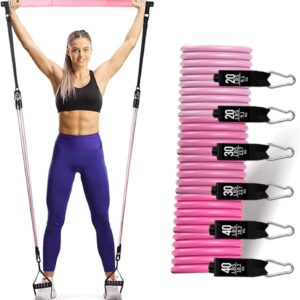
Featured Gear: Professional Pilates Bar Kit – Precision Tension for Ergonomic Core Alignment
2. Multi-Angle Articulation and Structural Versatility
Fixed-angle benches often force users into compromised positions, especially during heavy abdominal work. The 2026 standard for commercial benches requires micro-adjustment capabilities. A bench that offers 7+ decline and flat positions allows users of all heights to find their “optimal pivot point,” ensuring the load stays on the target muscle groups (abs and obliques) rather than the lower back or hip flexors.
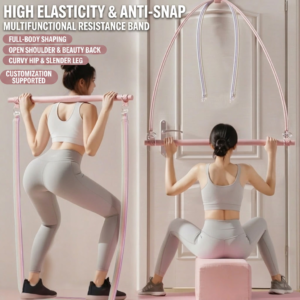
Sourcing Highlight: Pradai Folding Ab Bench – Multi-Angle Adjustment for Bio-Mechanical Efficiency
3. Adaptive Tactile Surfaces (TPU and Memory Foam)
The “touchpoints” of equipment—handles, pedals, and upholstery—are where ergonomics meet user comfort. In 2026, premium OEM manufacturers have replaced standard rubber with anti-slip, sweat-resistant TPU (Thermoplastic Polyurethane) and high-density memory foam. These materials adapt to the user’s grip and body shape, reducing pressure points and enhancing stability during high-intensity sets.
The Commercial Impact: Why Ergonomics Drive B2B Margins
Investing in ergonomically superior equipment delivers a measurable commercial impact for B2B distributors:
- Reduced Return and Warranty Claims: Precision-engineered gear with smooth pivot points and reinforced connections suffers far less mechanical wear than generic alternatives.
- Enterprise Contract Advantage: National health club chains and hospital-based fitness centers utilize ergonomic certification as a primary filter during the tender process.
- Brand Authority: Wholesalers who can provide bio-mechanical data and SGS structural reports for their gear build a reputation as professional authorities, not just commodity traders.
Conclusion: Engineering the Future of Wholesale Fitness
The fitness industry of 2026 is an industry of precision. As buyers move away from basic mechanical steel toward sophisticated bio-mechanical support systems, wholesalers must adapt their sourcing strategies to match. By anchoring your catalog with ergonomically certified, adjustable, and tactile-optimized equipment, you ensure long-term profitability and member satisfaction for your clients. Partnering with a manufacturer like YK Fitness, who prioritizes engineering-led design, is your strategic advantage.
Want to upgrade your catalog with precision-engineered fitness gear? Contact YK Fitness today to request our 2026 bio-mechanical test reports and OEM customization samples.