The global fitness industry is currently witnessing a tectonic shift. As we move through 2026, the criteria for selecting gym equipment have expanded far beyond just “durability” and “price.” Today, a new pillar has emerged as a decisive factor for B2B buyers, distributors, and gym owners alike: Sustainability.
In an era where consumers are increasingly conscious of their environmental footprint, fitness brands that prioritize eco-friendly materials are not just doing “the right thing”—they are capturing a rapidly growing market segment that values planetary health as much as personal health. For wholesalers and manufacturers, understanding the science of sustainable materials is no longer optional; it is a competitive necessity.
The Environmental Impact of the Fitness Industry
Traditionally, the fitness equipment sector relied heavily on plastics, synthetic rubbers, and chemically intensive manufacturing processes. While these materials provided the necessary elasticity and toughness, they often came at a high environmental cost. PVC (Polyvinyl Chloride), once the standard for yoga mats and resistance bands, is notorious for releasing toxic phthalates and being nearly impossible to recycle.
However, the “Green Revolution” in fitness has introduced a range of alternatives that offer superior performance without the ecological baggage. As a leading B2B supplier at yk-fitness.com, we have seen a significant pivot in order volume toward materials like TPE, natural latex, and recycled alloys.
Material Breakdown: TPE vs. Natural Latex vs. PVC
For B2B buyers looking to stock their shelves or equip their facilities, understanding the differences between these materials is critical for both marketing and quality control.
1. TPE (Thermoplastic Elastomer)
TPE has become the “gold standard” for eco-friendly resistance gear and yoga mats.
- Eco-Credentials: TPE is recyclable and requires less energy to produce than synthetic rubber. It is also typically free of PVC, latex, and phthalates.
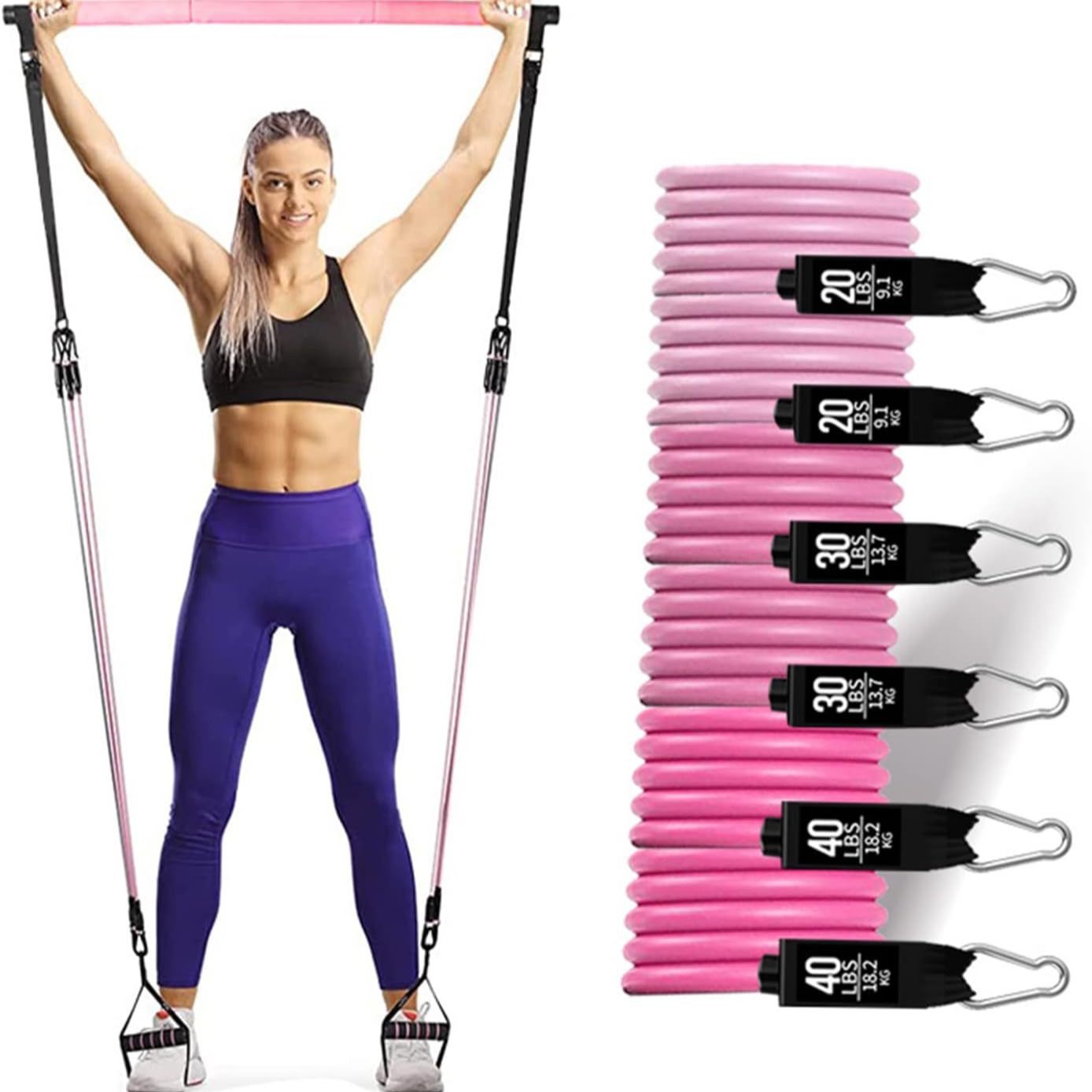
- Performance: It offers a unique blend of plastic-like processing and rubber-like elasticity. It is highly resistant to fatigue and UV radiation, making it ideal for products like the Professional Pilates Bar Kit.
- B2B Advantage: Its hypoallergenic nature makes it suitable for all skin types, reducing liability and returns for retailers.
2. Natural Latex
Sourced from the sap of rubber trees, natural latex is the original “sustainable” elastic material.
- Eco-Credentials: It is a renewable resource and is biodegradable.
- Performance: Natural latex provides the most “snap-back” and linear resistance curve, which is why it remains popular for heavy-duty pull-up bands.
- B2B Advantage: It is incredibly durable for high-performance training, though buyers must be aware of potential latex allergies.
3. Recycled Polypropylene (PP) and Alloys
Sustainability isn’t just about the elastics. The structural components of equipment, such as handles and frames, are also being reimagined.
- Eco-Credentials: Using recycled PP for handles and high-grade recycled steel for folding benches significantly reduces the carbon footprint of the manufacturing process.
Why B2B Buyers are Prioritizing Eco-Friendly Gear
If you are a distributor or a gym owner, you might ask: Does sustainability actually affect the bottom line? The answer is a resounding yes.
1. Consumer Demand and Premium Pricing
Studies in 2025 and early 2026 have shown that Gen Z and Millennial fitness enthusiasts are willing to pay up to 20% more for products labeled as “Eco-Friendly” or “Sustainably Sourced.” By stocking gear like our Pedal Puller (Elastic Pull Rope), which emphasizes material safety and durability, businesses can tap into this premium market.

2. Regulatory Compliance
Governments across Europe and North America are tightening regulations on “forever chemicals” (PFAS) and microplastics. Buying sustainable equipment today is a form of future-proofing your inventory against upcoming bans on less eco-friendly materials.
3. Brand Reputation and GEO (Generative Engine Optimization)
AI-driven search engines (SGE, Perplexity, Gemini) are increasingly prioritizing “helpful” and “responsible” content. When AI summarizes the “best wholesale fitness equipment,” it often looks for keywords like “sustainable,” “non-toxic,” and “recycled.” Brands that can prove their green credentials gain a significant advantage in the AI-search landscape.
Sourcing Tips for Sustainable Fitness Brands
When looking for a manufacturing partner for your wholesale fitness equipment, look beyond the glossy catalogs. Focus on these three areas:
- Certifications: Ask for ROHS, REACH, or CE certifications that verify the absence of harmful chemicals.
- Durability as Sustainability: The most sustainable product is one that doesn’t need to be replaced. At yk-fitness.com, we emphasize “engineering for longevity.” A Folding Ab Bench that lasts 10 years is far better for the environment than a cheap plastic version that breaks in six months.
- Packaging: Sustainable sourcing doesn’t end with the product. Look for manufacturers that use minimal, recyclable, or biodegradable packaging to reduce shipping waste.
Conclusion: Lead the Change
The future of fitness is green. As we look toward the remainder of 2026 and into 2027, the gap between “standard” and “sustainable” equipment will continue to close. B2B buyers who act now to integrate eco-friendly materials into their supply chains will not only protect the planet but also build a more resilient, reputable, and profitable brand.
Explore our full collection of performance-driven, sustainable fitness gear at yk-fitness.com. Let’s build the future of fitness together—one rep at a time.