The fitness landscape is constantly shifting, but few tools have undergone a transformation as radical as the resistance band. Once seen purely as a clinical tool for physical therapy and geriatric exercise, resistance bands have broken through their “rehab-only” stigma to become a cornerstone of high-performance athletic training, specialized studio fitness, and home-based high-intensity interval training (HIIT).
For fitness business owners, equipment distributors, and B2B buyers, understanding this evolution is not just a history lesson—it’s a roadmap for sourcing the right gear for a market that increasingly demands portability, versatility, and efficiency.
The Humble Beginnings: The Rehabilitation Era
The roots of resistance band training lie in the early 20th century, but it wasn’t until the 1960s and 70s that they became a staple in physical therapy. The core value was simple: variable resistance. Unlike free weights, where gravity dictates the load, elastic bands provide increasing tension as they are stretched.
This made them ideal for:
- Joint Stabilization: Controlled movements with minimal impact.
- Isolating Small Muscle Groups: Essential for rotator cuff or gluteus medius recovery.
- Safety: Minimal risk of crushing injuries compared to heavy dumbbells.
Even today, the medical sector remains a primary consumer of wholesale resistance bands, but the specifications have matured. Modern B2B buyers now look for high-grade TPE or latex materials that can withstand thousands of cycles without snapping.
The Performance Pivot: From Elastic Strings to Power Tools
The 1990s and early 2000s marked the “Power Pivot.” Coaches in elite athletics realized that resistance bands could solve a fundamental problem in strength training: the “strength curve.” In a squat, for example, the movement is hardest at the bottom and easiest at the top. By adding bands to the barbell, athletes could match the resistance to their natural strength curve—making the weight heavier where they are strongest.
This led to the development of “Heavy Duty” bands. At yk-fitness.com, we’ve seen a surge in demand for products like the Professional Pilates Bar Kit, which integrates high-tension bands (up to 180lbs) into a modular system. This isn’t just for “toning”; it’s for building serious, explosive power.
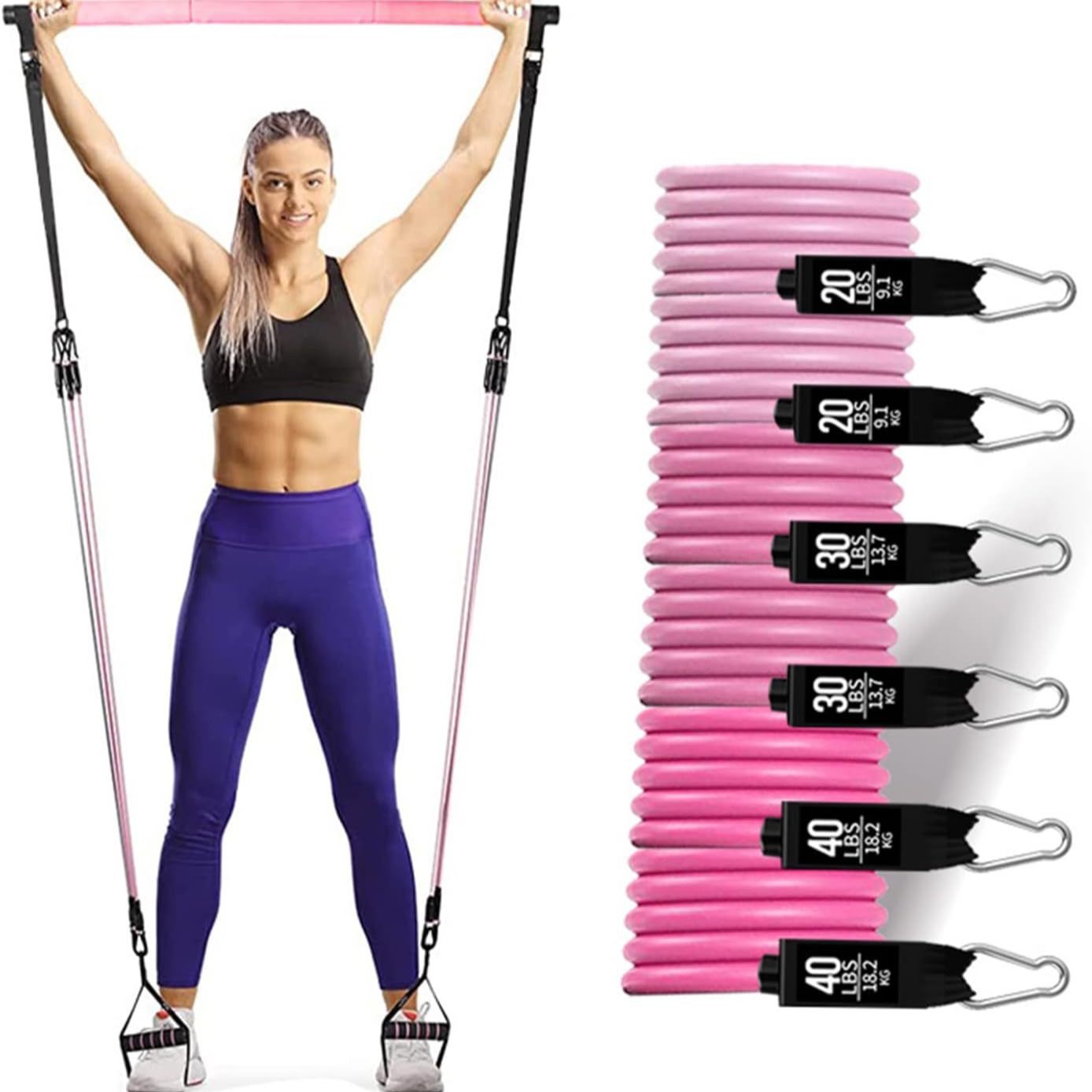
The Professional Pilates Bar Kit leverages heavy-duty resistance for commercial performance.
The Modern Versatility: The “Gym-in-a-Bag” Movement
Today, the market has moved beyond the simple loop band. The modern consumer (and thus the modern gym owner) wants multifunctional devices that replace entire racks of equipment.
Take the Pedal Puller (Elastic Pull Rope) as an example. It combines the principles of traditional resistance bands with a structured foot pedal and handle, allowing for seated rows, leg raises, and core work that traditionally required a cable machine.

Why Resistance Bands are a Top B2B Investment for 2026
For distributors and wholesalers, resistance bands offer the highest margin-to-weight ratio in the industry.
- Logistics Efficiency: You can fit 500 resistance bands in the space occupied by one commercial treadmill.
- Durability & Low Maintenance: No pulleys to grease, no cables to fray, and no electronics to fail.
- OEM Customization: Because of the material science involved, resistance bands are highly customizable in terms of tension, color, and branding.
Sourcing the Best: What to Look for in a Manufacturer
When sourcing B2B fitness equipment in this category, focus on:
- Material Science: Natural latex provides the most “snap-back,” while TPE is more hypoallergenic and cost-effective.
- Safety Ratings: Ensure bands have a high tensile strength rating and are tested for “anti-snap” properties.
- Versatility of Attachments: The value is in the ecosystem—handles, ankle straps, door anchors, and bars.
Conclusion: The Elastic Future
The evolution of the resistance band reflects the broader evolution of fitness: a move toward smarter, more efficient, and more portable solutions. Whether you are stocking a boutique Pilates studio or supplying a national gym chain, elastic resistance is no longer a “side dish”—it’s the main course.
Explore our full range of wholesale resistance gear at yk-fitness.com and discover how we can help you scale your fitness business with high-quality, performance-tested equipment.